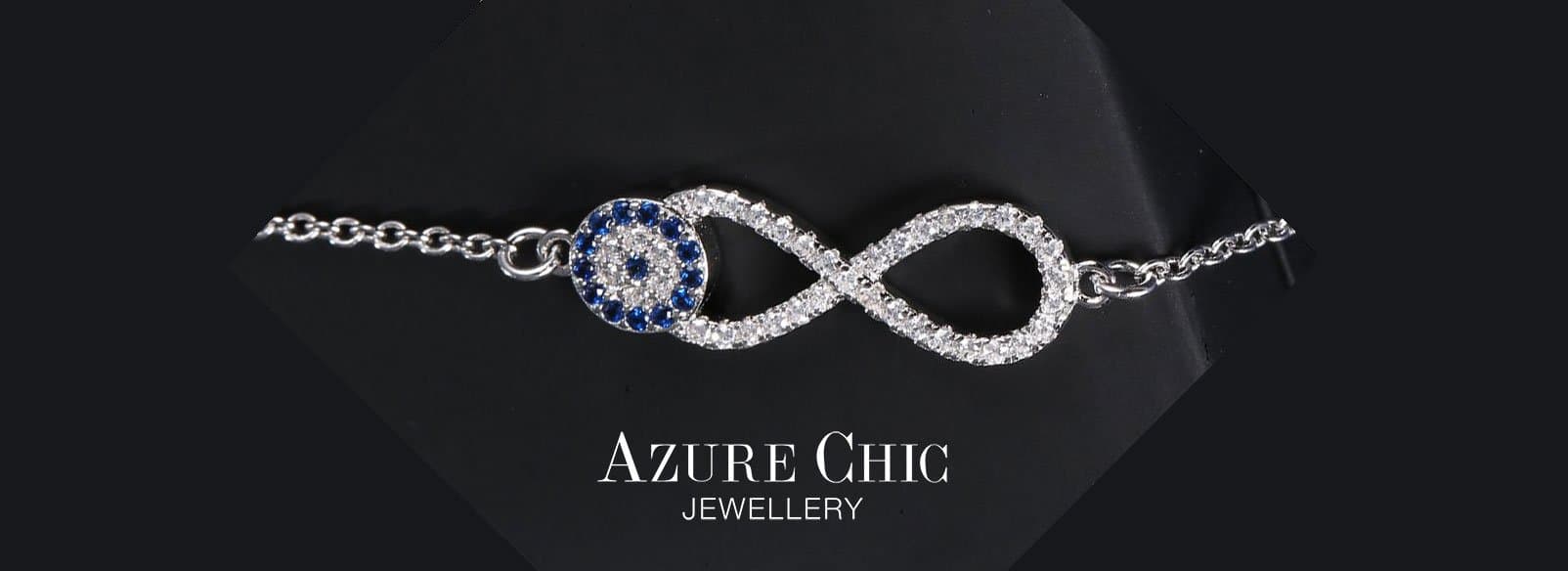
Meanings & symbols
The Evil Eye: Meaning, History and How to Wear Evil Eye Jewellery
Updated · 2 min read
Quick answer
The 'evil eye' is a curse believed to be caused by an envious or jealous look. Evil eye jewellery — usually a blue eye, called mati in Greek and nazar in Turkish — is a protective charm worn to deflect that envy and bring good luck. The tradition is thousands of years old and is especially strong in Greece, Cyprus, Turkey and the wider Mediterranean.
What is the evil eye?
The evil eye is the belief that a look filled with envy — sometimes even unintended admiration — can bring misfortune to the person or thing being looked at. The charm we call an 'evil eye' is actually the opposite: an amulet that protects against that look by 'looking back'.
The name causes confusion, so it is worth saying clearly: wearing an evil eye is not unlucky. It is meant to keep bad luck away.
Where the tradition comes from
Belief in the evil eye appears across the ancient world. Greek and Roman writers discussed it, and eye-shaped protective amulets have been found across the Mediterranean and the Middle East. The tradition also exists in Jewish, Islamic, Hindu and many folk cultures.
- Greece and Cyprus: the blue mati (μάτι, 'eye') is pinned on babies' clothes, hung in homes and cars, and worn as jewellery. Many families also know a prayer said to remove the eye (xematiasma).
- Turkey: the glass nazar boncuğu ('evil eye bead') is one of the country's best-known symbols. Nazar comes from the Arabic word for 'sight' or 'look'.
- Middle East and North Africa: the eye often appears inside the hamsa, an open hand.
What the colours of the evil eye mean
Traditional meanings vary by region, but the most common associations are:
- Dark blue: protection and calm — the classic colour.
- Light blue: clarity and peace.
- Green: balance and new beginnings.
- Red: courage and energy.
- White: purity and focus.
Colour meanings are folk traditions rather than fixed rules — choose the one that feels right for you or the person you are gifting.
Can you buy an evil eye for yourself?
Yes. Some people believe an evil eye works best when given as a gift, but buying one for yourself is common and perfectly fine. Popular moments to give one are a new baby, a new home, a new job, an engagement or a big trip.
A traditional belief says that if an evil eye cracks or breaks, it has done its job by absorbing negative energy — and should be replaced.
How to wear evil eye jewellery
- Necklace: keeps the eye close to the heart — the most popular choice.
- Bracelet: visible to you and to others, often stacked with fine chains.
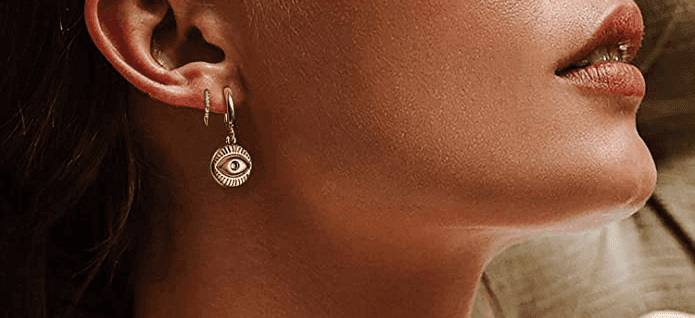
- Earrings: a subtle way to wear the symbol every day; evil eye hoops are especially popular.
You can wear an evil eye whatever your beliefs — for many people it is simply a beautiful symbol of Mediterranean culture. To combine it with another meaning, see what an infinity bracelet means.
Frequently asked questions
What does the evil eye mean?
The evil eye is a curse believed to come from an envious look. Evil eye jewellery is a protective charm worn to deflect it and bring good luck.
Is it bad luck to wear an evil eye?
No. The evil eye charm protects against bad luck — it is the envious look, not the charm, that is considered harmful.
What is the evil eye called in Greek?
In Greek it is called mati (μάτι), meaning 'eye'. In Turkish the blue bead is called nazar.
What does a broken evil eye mean?
Traditionally, a cracked or broken evil eye has absorbed negative energy and done its job, so it should be replaced.
Can I buy an evil eye for myself?
Yes. Giving one as a gift is a lovely tradition, but buying your own is common and perfectly fine.
First published by the Azure Chic team in Limassol, Cyprus. Questions? Email sales@azurechic.com.