Jewellery care
How to Clean Sterling Silver Jewellery at Home (Safely)
Updated · 2 min read
Quick answer
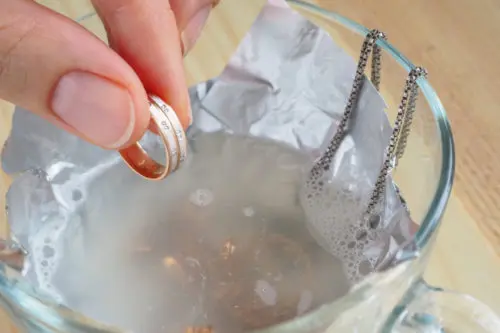
For light tarnish, rub sterling silver with a silver polishing cloth. For everyday dirt, wash it in warm water with a drop of mild washing-up liquid, rinse and dry completely. For heavy tarnish on solid sterling silver only, place it on aluminium foil in a bowl, add a tablespoon of baking soda and hot water for a few minutes, then rinse and dry. Never use the foil method on gold-plated silver, pearls or glued stones.
Why sterling silver tarnishes
Sterling silver is 92.5% silver mixed with other metals, usually copper. Over time the silver reacts with sulphur compounds in the air, perfume, sweat and some foods, forming a thin dark layer of silver sulphide — tarnish. It is normal, harmless and reversible. Humidity speeds it up; regular wear and dry storage slow it down.
Method 1: polishing cloth (light tarnish)
- Use a dedicated silver polishing cloth.
- Rub gently in straight lines, not circles, to avoid fine scratches.
- Use a clean part of the cloth as it darkens.
This is the safest method and works for most pieces, including those with stones. On gold-plated silver, polish very lightly or not at all — heavy polishing can wear the plating.
Method 2: warm water and mild soap (everyday clean)
- Mix warm (not hot) water with a drop of mild washing-up liquid.
- Soak for a few minutes and clean gently with a very soft toothbrush.
- Rinse in clean water and dry completely with a soft cloth.
Safe for plated jewellery and most stones. Do not soak pearls — wipe them with a damp cloth instead.
Method 3: baking soda and aluminium foil (heavy tarnish)
This method reverses tarnish through a simple chemical reaction between the silver sulphide, the aluminium and the baking soda solution.
- Line a heat-proof bowl with aluminium foil, shiny side up.
- Place the silver pieces on the foil so they touch it.
- Add one tablespoon of baking soda.
- Pour over hot (just boiled) water to cover the jewellery.
- Leave for 2–5 minutes, turning pieces with a wooden spoon if needed.
- Remove carefully (it's hot), rinse in clean water and dry thoroughly.
Only for solid sterling silver. Do not use it on gold-plated or vermeil pieces, pearls, opals, turquoise, glued stones, or 'oxidised' designs where darkened details are intentional — it can remove plating and damage them.
What not to do
- Don't use toothpaste or abrasive powders — they scratch the surface.
- Don't use bleach or chlorine — they can pit and discolour silver.
- Don't use silver dips on plated jewellery or stones.
- Don't store jewellery damp.
How to keep silver from tarnishing
- Wear it often — gentle friction keeps it bright.
- Put jewellery on after perfume, creams and hairspray.
- Remove it before swimming, showering, cleaning and exercise.
- Store pieces separately in a dry pouch or a lined box, ideally with an anti-tarnish strip.
Solid gold does not tarnish like silver — read more in our gold guide — and our guide to 925 sterling silver explains the metal in more detail.
Frequently asked questions
What is the best way to clean sterling silver at home?
A silver polishing cloth for light tarnish, warm water with mild soap for everyday dirt, and baking soda with aluminium foil and hot water for heavy tarnish on solid sterling silver only.
Can I clean gold-plated silver with baking soda and foil?
No. The foil method can strip plating. Clean plated jewellery with warm soapy water and a very soft cloth only.
Does toothpaste clean silver?
It removes tarnish but is abrasive and leaves fine scratches, so it is not recommended.
Why does my silver turn black?
Silver reacts with sulphur compounds in the air, perfume and skin, forming a dark layer of silver sulphide called tarnish. It can be cleaned off.
First published by the Azure Chic team in Limassol, Cyprus. Questions? Email sales@azurechic.com.