Buying guides
Lab-Grown Diamond Engagement Rings: Are They Worth It? A 2026 Buyer's Guide
Updated · 5 min read
Quick answer
Yes, for most couples a lab-grown diamond engagement ring is worth it: it is a real diamond, chemically, physically and optically identical to a mined one, just as hard and just as sparkly, for a fraction of the price. At Azure Chic, the same 1.00 ct six-prong solitaire in 14k gold is €1,370 with a D colour, VVS2 clarity lab-grown diamond, against €9,680 with a natural G colour, VS2 clarity diamond. The trade-off is resale value: lab-grown diamonds sell on for very little, so choose lab-grown to get the biggest, whitest diamond for your budget, and natural if rarity and long-term value matter most.
Lab-grown vs natural engagement rings at a glance
| Lab-grown diamond | Natural diamond | |
|---|---|---|
| Is it a real diamond? | Yes: pure carbon, same crystal | Yes |
| Hardness | 10 on the Mohs scale | 10 on the Mohs scale |
| Sparkle | Identical | Identical |
| How it's made | Grown in weeks (HPHT or CVD) | Formed over billions of years underground |
| 1.00 ct solitaire, 14k gold (Azure Chic) | €1,370 (D/VVS2) | €9,680 (G/VS2) |
| 0.50 ct solitaire, 14k gold (Azure Chic) | €1,170 (D/VVS2) | €2,830 (G/VS2) |
| Certificate | IGI (full 4Cs grading) | GIA grading report |
| Resale value | Low | Higher, but still below what you paid |
| Rarity | Can be produced to order | Genuinely rare |
Are lab-grown diamonds real diamonds?
Yes. A lab-grown diamond is made of the same pure carbon, in the same crystal structure, as a diamond from a mine. It has the same hardness (10, the maximum on the Mohs scale), the same refractive index and the same fire. The US Federal Trade Commission recognised this in 2018, when it removed the word "natural" from its definition of a diamond.
The only difference is where and how fast it grew:
- Natural diamonds formed 150–200 km below the surface, under enormous heat and pressure, over hundreds of millions to billions of years.
- Lab-grown diamonds are grown in weeks, either by HPHT (high pressure, high temperature, recreating conditions deep in the Earth) or by CVD (chemical vapour deposition, building the crystal layer by layer from carbon-rich gas).
You can't tell them apart by eye, and a standard diamond tester reads both as diamond. Only specialised laboratory equipment can detect the tiny differences in how they grew.
How popular are lab-grown engagement rings?
Very. According to The Knot's Real Weddings Study of more than 10,000 US couples married in 2025, 61% of engagement rings had a lab-grown centre stone, up from 52% the year before, the first time lab-grown overtook natural. Couples choosing lab-grown also bought bigger diamonds: around 2 carats on average, compared with about 1.6 carats for natural.
The same study found oval and round were the most popular shapes and yellow gold the most popular metal.
How much does a lab-grown diamond engagement ring cost?
The price depends mostly on the diamond's size and the gold. At Azure Chic, every lab-grown diamond is graded D colour (colourless) and VVS2 clarity, the top end of the scale, and set in solid 9k, 14k or 18k gold:
- 0.50 ct six-prong solitaire, 14k gold: €1,170
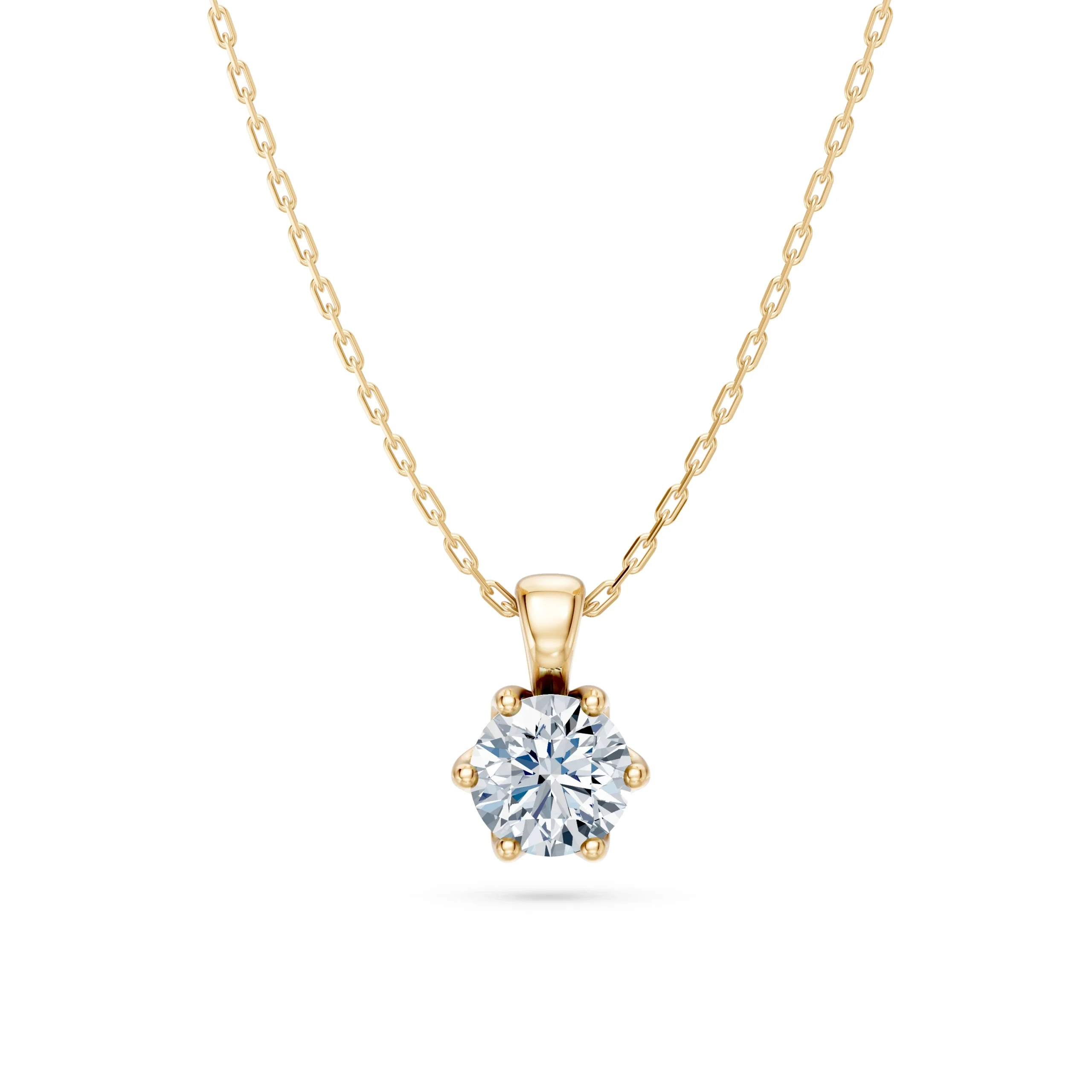
- 1.00 ct six-prong solitaire, 14k gold: €1,370
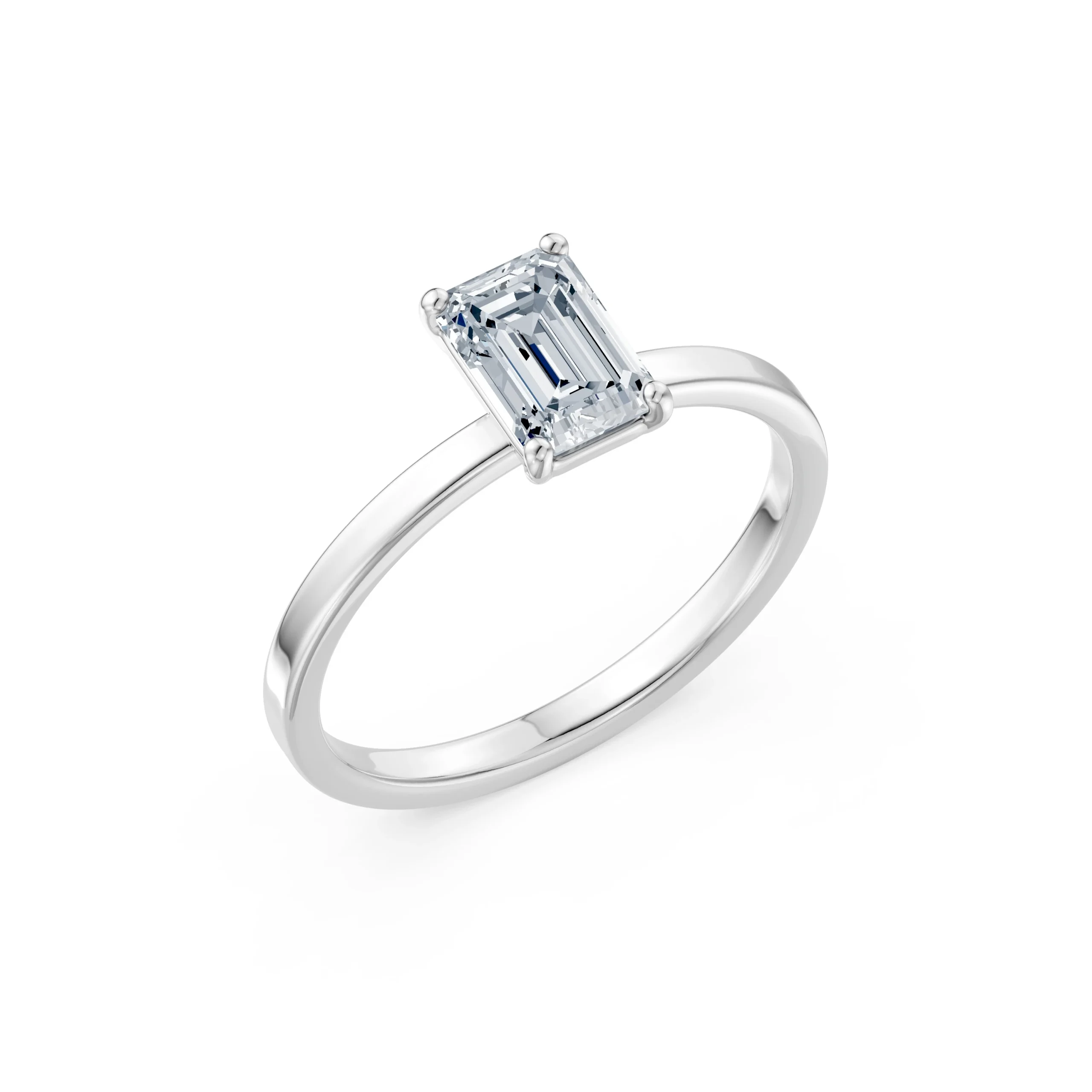
- 1-carat fancy shapes (oval, cushion, emerald, marquise) in the Elara, Lyra, Thalassa, Kalypso, Asteria and Ariadne collections: from €970
For comparison, the natural version of the same 1.00 ct solitaire, with a G/VS2 diamond, is €9,680. A natural diamond of the same D/VVS2 grade costs even more.
Prices for lab-grown diamonds have fallen sharply over the past few years and have been levelling off. That's good news for buyers, but it's also why resale value is low (see below).
Do lab-grown diamonds hold their value?
Honestly, no. Because lab-grown diamonds can be produced in quantity and prices have dropped, the second-hand value is low; industry estimates put it at roughly 10–30% of the original price. Natural diamonds hold more of their value, but they also typically resell for well below what you paid in a shop.
So treat an engagement ring as something to wear and love, not as an investment. If resale value matters to you, choose a natural diamond. If you want the most beautiful ring for your budget, lab-grown gives you far more diamond for the money.
Lab-grown diamond certificates: IGI vs GIA
A certificate (grading report) from an independent laboratory confirms what you're buying.
- IGI (International Gemological Institute) grades lab-grown diamonds on the full 4Cs: colour, clarity, cut and carat. Azure Chic lab-grown engagement rings marked "Certified" come with an IGI certificate.
- GIA (Gemological Institute of America) changed its lab-grown reports in October 2025. Instead of colour and clarity grades, it now gives lab-grown diamonds a broader "premium" or "standard" description, because most lab-grown diamonds fall into a very narrow, high range of colour and clarity. GIA's reports for natural diamonds are unchanged, and natural diamonds marked "Certified" at Azure Chic come with a GIA grading report.
Whichever you choose, check that the certificate states the diamond is laboratory-grown, and that its carat, colour and clarity match the ring description.
Are lab-grown diamonds durable enough for everyday wear?
Yes, exactly as durable as natural diamonds. They're just as hard, so they won't scratch, cloud or change colour over time. The things that protect any engagement ring apply equally:
- Choose 14k gold for a good balance of strength and colour.
- A six-prong or bezel setting holds the diamond most securely.
- Take the ring off for the gym, swimming pools and cleaning.
- Have the claws checked once a year.
Read our guide to waterproof gold jewellery for what your ring can and can't handle.
Are lab-grown diamonds more ethical?
Lab-grown diamonds involve no mining, and their origin is fully traceable. Growing them uses a lot of energy, though, so their environmental footprint depends on how that energy is produced. Natural diamonds, meanwhile, support mining communities, and responsible mining has strict rules. If ethics is your main reason for choosing, ask about the origin, but for most couples the deciding factors are budget and what the diamond means to them.
How to choose a lab-grown engagement ring
- Set your budget, then decide between a bigger stone (lab-grown) or a rarer one (natural).
- Choose the shape. Round sparkles most; oval and marquise look larger for their carat weight; emerald and cushion feel elegant and vintage.
- Choose the setting. A classic solitaire, a halo for extra sparkle, side stones or a split shank for a statement.
- Choose the gold. White gold makes the diamond look whitest; yellow gold is warm and very popular; rose gold is romantic. 14k is ideal for everyday wear.
- Get the size right. Borrow a ring she wears on that finger and use our ring size guide (EU sizes 48–62).
- Check the certificate for certified stones.
Ready to compare? See every design on our lab-grown engagement rings page, or browse all engagement rings, natural and lab-grown.
Frequently asked questions
Are lab-grown diamond engagement rings worth it?
For most couples, yes. They are real diamonds, identical in look and durability to natural ones, at a much lower price: a 1.00 ct solitaire in 14k gold is €1,370 lab-grown against €9,680 natural at Azure Chic. The main downside is low resale value.
Can a jeweller tell if a diamond is lab-grown?
Not by eye or with a standard diamond tester, which reads both as diamond. Only specialised laboratory equipment can detect the differences in how the crystal grew. Certificates state whether a diamond is natural or laboratory-grown.
Do lab-grown diamonds get cloudy or change colour?
No. Lab-grown diamonds have the same structure and hardness as natural diamonds, so they won't cloud, fade or change colour. Like any diamond, they look dull only when dirty, and a clean with warm soapy water restores the sparkle.
How much is a 1 carat lab-grown diamond engagement ring?
At Azure Chic, a 1.00 ct lab-grown six-prong solitaire with a D colour, VVS2 clarity diamond is €1,370 in 14k gold, with free insured delivery and 30-day returns.
Do lab-grown diamonds come with a certificate?
Certified lab-grown diamonds at Azure Chic come with an IGI certificate, which grades the full 4Cs. Since October 2025, GIA describes lab-grown diamonds as 'premium' or 'standard' rather than giving colour and clarity grades.
Is it okay to propose with a lab-grown diamond?
Absolutely. More than half of couples now do: The Knot's study of couples married in 2025 found 61% of engagement rings had a lab-grown centre stone.
What is the difference between HPHT and CVD lab-grown diamonds?
They are two ways of growing a diamond. HPHT recreates the high pressure and temperature deep in the Earth; CVD builds the diamond layer by layer from a carbon-rich gas. Both produce real diamonds, and the grade matters far more than the method.
First published by the Azure Chic team in Limassol, Cyprus. Questions? Email sales@azurechic.com.