Buying guides
How to Choose an Engagement Ring: A Step-by-Step Guide
Updated · 6 min read
Quick answer
To choose an engagement ring, set your budget first, then pick the diamond shape she loves (round, oval, cushion, emerald or marquise), decide between a natural or lab-grown diamond, and spend on cut and size before colour and clarity: a G colour, VS2 clarity diamond looks white and clean to the eye. Choose a setting that suits her style (solitaire, halo, pavé or side stones), 14k gold for durability, and find her ring size discreetly from a ring she already wears. Buy from a jeweller that includes a diamond certificate, insured delivery and a returns policy.
The 8 steps at a glance
| Step | Decide | Our quick advice |
|---|---|---|
| 1 | Budget | Spend what feels comfortable; the "three months' salary" rule is a 1930s advert, not a rule |
| 2 | Diamond shape | Look at what she already wears: classic → round; modern → oval or emerald; vintage → cushion |
| 3 | Natural or lab-grown | Natural for rarity; lab-grown for a bigger, whiter diamond for the money |
| 4 | The 4Cs | Cut first, then carat; G colour and VS2 clarity look perfect to the eye |
| 5 | Setting | Solitaire for timeless, halo for maximum sparkle, side stones for something different |
| 6 | Gold | 14k is the best balance of colour and durability; white, yellow or rose to match her jewellery |
| 7 | Ring size | Borrow a ring she wears on her ring finger, or ask a close friend |
| 8 | Where to buy | Certificate, insured delivery and a clear returns policy |
1. Set your budget
There is no "right" amount to spend. The famous three months' salary rule came from a diamond advertising campaign, not from tradition. Spend what you can afford without debt, and remember that the diamond, not the gold, is what drives the price.
As a guide, a solid gold engagement ring with a real diamond starts from about €370 at Azure Chic, and a 1 carat diamond solitaire in 14k gold is €1,370 with a lab-grown diamond or €9,680 with a natural one. That gap is why step 3 matters so much.
If your budget is fixed, decide what matters most to her: size (go lab-grown or choose an oval or marquise, which look bigger), rarity (natural, smaller stone), or sparkle (a halo or pavé band adds light around a smaller centre diamond). See the best engagement rings by budget, or what a 1 carat diamond ring really costs, natural and lab-grown.
2. Choose the diamond shape
Shape is the first thing anyone notices, and it is the most personal choice. The quickest clue is the jewellery she already wears and the rings she points out.
- Round brilliant: the classic and the most sparkly. Timeless and safe if you're unsure.
- Oval: elongates the finger and looks about 10% larger than a round diamond of the same carat weight. The most popular modern choice.
- Cushion: a square with softly rounded corners; romantic and slightly vintage.
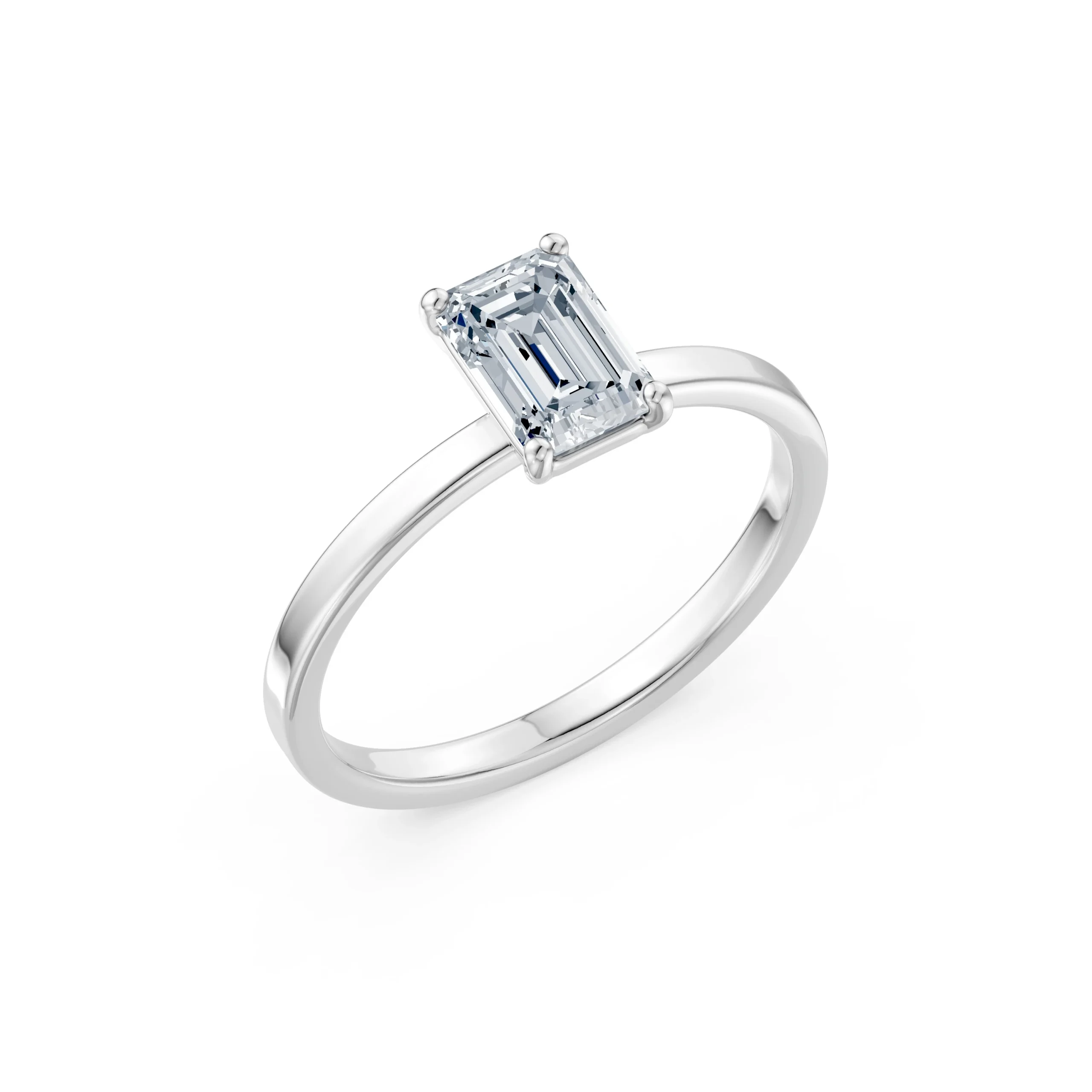
- Emerald cut: a rectangle with long, mirror-like facets. Elegant and modern; shows less sparkle but more clarity, so choose a higher clarity grade.
- Marquise: a pointed oval that looks the largest of all for its weight and very slimming on the hand.
Not sure? Our ring finder asks five quick questions and suggests three rings that match.
3. Natural or lab-grown diamond?
Both are real diamonds: the same carbon crystal, hardness (10 on the Mohs scale) and sparkle. You can't tell them apart by eye; only a gemmologist with specialist equipment can. The difference is origin and price.
- Natural diamond: formed in the earth over billions of years. Rarer, more traditional and holds its value better.
- Lab-grown diamond: grown above ground in weeks. For the same budget you get a much bigger and whiter stone, often 70–85% less than a natural diamond of the same size and grade.
Our honest advice: if she values tradition or rarity, choose natural. If she'd love a bigger, whiter diamond, lab-grown is the smart choice. Read the full comparison in lab-grown vs natural diamonds or are lab-grown engagement rings worth it?
4. The 4Cs, in the right order
The 4Cs are cut, colour, clarity and carat. You don't need the top grade of each; you need the right balance.
- Cut: how well the diamond is shaped to reflect light. It matters most for sparkle, so never compromise here.
- Carat: weight, which shows as size. Decide this with step 1 and the shape you've chosen.
- Colour: D is completely colourless; G is near-colourless and looks white once set, especially in white gold. In yellow or rose gold you can go a grade lower without seeing a difference.
- Clarity: tiny natural marks inside the diamond. VS2 is "eye-clean": the marks are invisible without magnification. VVS2 is cleaner still, worth it for emerald cuts.
So a G colour, VS2 clarity natural diamond is the sweet spot for value, and our lab-grown diamonds are all D colour, VVS2 clarity, the top colour grade. Certified diamonds come with a GIA report (natural) or IGI certificate (lab-grown). More detail in our diamond guide.
5. Choose the setting
The setting is the metal design that holds the diamond, and it changes the whole look.
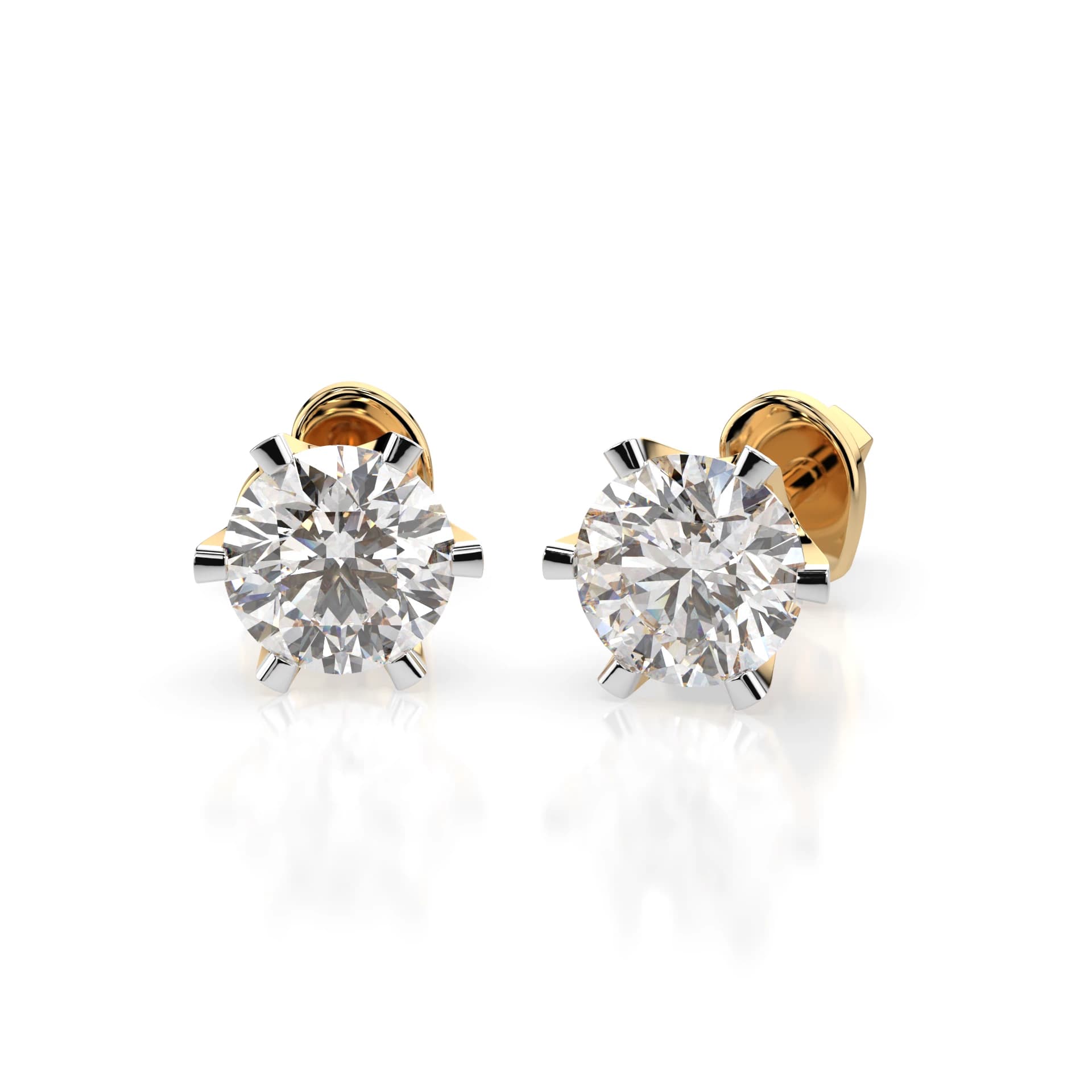
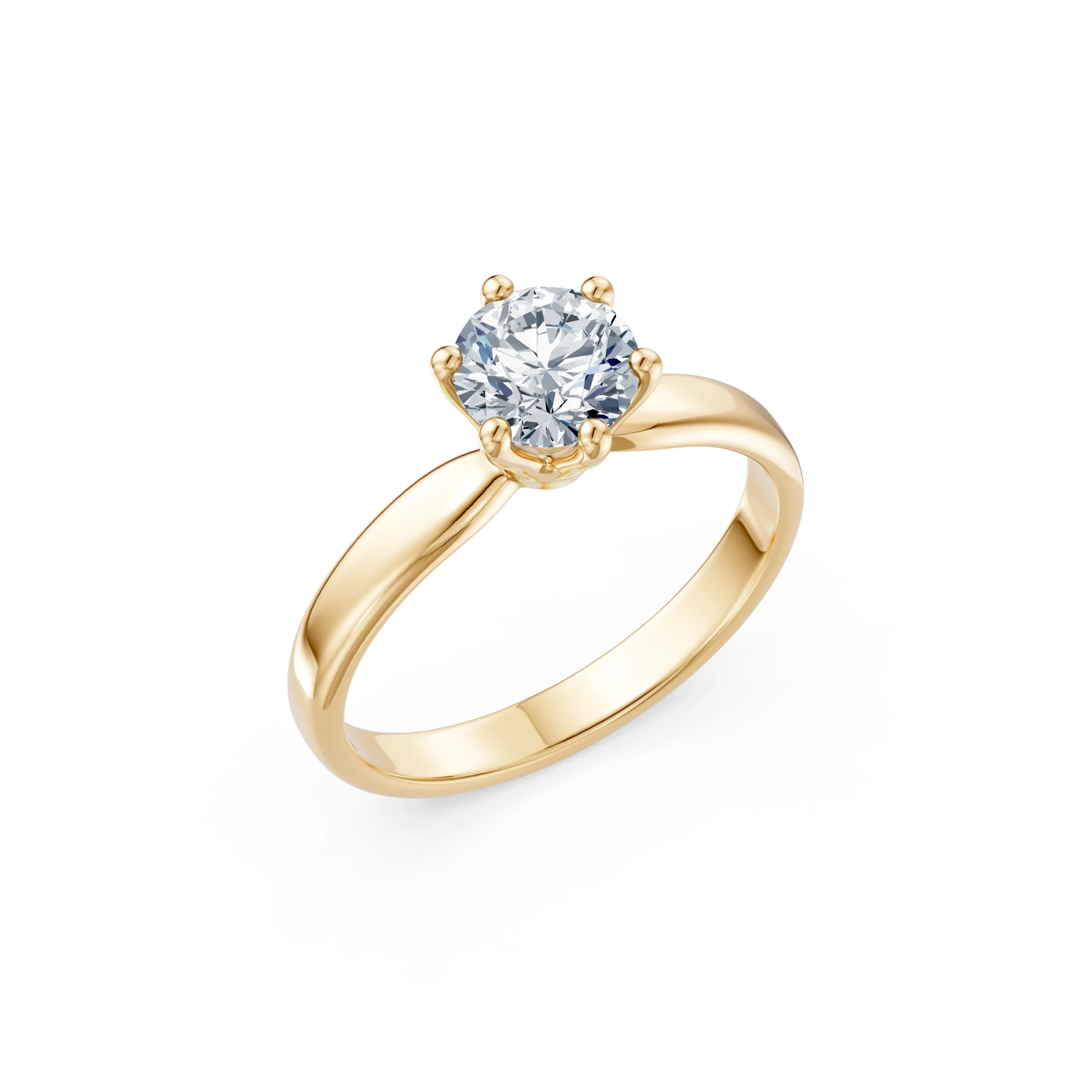
- Solitaire: a single diamond on a plain band. Timeless, lets the diamond speak and goes with any wedding band. Six prongs hold the stone securely; four prongs show more of it.
- Pavé band: small diamonds set along the band for extra sparkle, like the Alkmini or Thalassa.
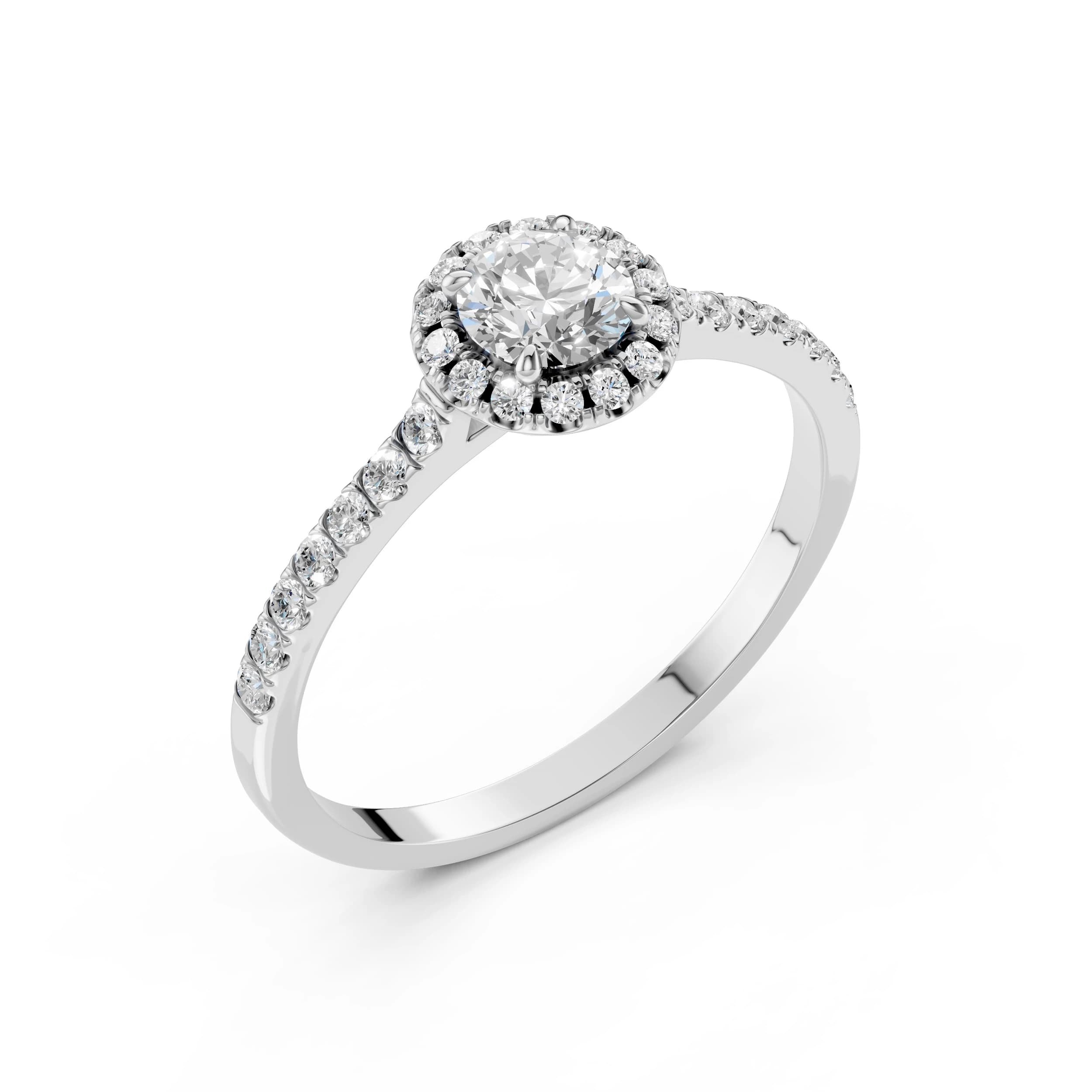
- Halo: a ring of small diamonds around the centre stone. It makes the centre diamond look noticeably bigger, so it's great value, like the Halia halo.
- Side stones and clusters: diamonds beside the centre stone for a distinctive, modern look, like the Ariadne with marquise side stones or the Asteria cluster.
- Split shank: the band divides as it meets the diamond, as on the Kalypso. Elegant and eye-catching.
Think about her lifestyle too: if she works with her hands, a lower, smoother setting is more practical than a tall one.
6. Choose the gold
Colour: match the jewellery she wears every day. White gold makes diamonds look whitest and is the most popular; yellow gold is warm and classic; rose gold is romantic and flattering on most skin tones.
Purity: - 14k gold (58.5% gold) is our recommendation for an engagement ring: rich colour and hard enough for everyday wear. - 18k gold (75% gold) has the deepest colour and feels more luxurious, but is slightly softer. - 9k gold (37.5% gold) is the most affordable and the hardest-wearing.
Read more in our gold guide: 9k vs 14k vs 18k.
7. Find her ring size without spoiling the surprise
- Borrow a ring she wears on her ring finger and measure the inside diameter in millimetres, or draw around the inside on paper.
- Ask a close friend or family member, who may know or can find out.
- Compare with your own fingers: slide one of her rings onto your finger and mark where it stops.
- If in doubt, go slightly bigger: a ring that's a little loose is easier to adjust than one that won't go on.
Our ring size guide converts millimetres to EU sizes 48–62 and US sizes.
8. Buy safely, online or in store
Whoever you buy from, check four things:
- A diamond certificate (GIA or IGI) or a clear written grade for every diamond.
- The full price before checkout, with gold purity and diamond grade stated, not "from" prices only.
- Fully insured, tracked delivery.
- A returns policy in writing. At Azure Chic, unworn rings can be returned within 30 days (as long as they haven't been resized).
Azure Chic is an independent Limassol jeweller, online since 2014. Engagement rings are dispatched in as little as 3 business days (14k gold with a G/SI or lab-grown diamond; other options are made to order within 10 business days) with free insured delivery. Prefer to talk it through? Message us on WhatsApp for a free, no-pressure consultation, extra photos or a video of any ring. More in buying fine jewellery from an independent jeweller.
Mistakes to avoid
- Buying the biggest carat with a poor cut. A smaller, well-cut diamond sparkles more than a big dull one.
- Paying for invisible grades. D colour or flawless clarity costs far more but looks the same as G/VS2 once set.
- Ignoring her style. A ring she'll wear every day for decades should match her, not a trend.
- Guessing the size wildly. Use one of the tricks above.
- Buying without a certificate or returns policy.
Frequently asked questions
How much should I spend on an engagement ring?
Spend what you can comfortably afford; the 'three months' salary' rule came from a 1930s advertising campaign. Solid gold engagement rings with a real diamond start from about €370 at Azure Chic, and a 1 carat lab-grown diamond solitaire in 14k gold is €1,370.
What is the most popular engagement ring shape?
Round brilliant is the classic and the most sparkly; oval is the most popular modern choice because it looks larger for its carat weight and flatters the hand.
What diamond colour and clarity should I choose?
G colour and VS2 clarity are the best value for a natural diamond: G looks white once set and VS2 has no marks visible to the eye. For an emerald cut, choose VVS2 clarity because its open facets show more.
Are lab-grown diamonds real?
Yes. Lab-grown diamonds are real diamonds with the same chemistry, hardness and sparkle as natural diamonds. They are grown above ground and cost much less for the same size and grade.
Which gold is best for an engagement ring?
14k gold is the best balance: 58.5% pure gold with a rich colour, and hard enough to wear every day. White gold makes diamonds look whitest.
How can I find out her ring size secretly?
Borrow a ring she wears on her ring finger and measure its inside diameter, ask a close friend or family member, or slide one of her rings onto your own finger and mark where it stops.
Which hand does an engagement ring go on?
In the UK, US and most of Western Europe it is worn on the left ring finger. In Greece and Cyprus it is usually worn on the left hand during the engagement and moves to the right hand, with the wedding band, after the wedding.
First published by the Azure Chic team in Limassol, Cyprus. Questions? Email sales@azurechic.com.