Buying guides
Cubic Zirconia vs Diamond: What's the Real Difference?
Updated · 7 min read
Quick answer
Cubic zirconia (CZ) is a man-made crystal of zirconium dioxide that imitates a diamond; a diamond is pure carbon, natural or lab-grown. A diamond is much harder (10 on the Mohs scale against about 8 to 8.5 for CZ), so it stays sharp and bright for generations, while CZ slowly scratches and clouds with daily wear. CZ shows more rainbow-coloured flashes, a diamond more white sparkle. CZ costs a few euros a stone and has no resale value; a diamond costs far more but lasts a lifetime. Choose CZ for affordable fashion and silver jewellery, and a diamond for engagement rings and heirlooms.
Cubic zirconia vs diamond at a glance
| Cubic zirconia (CZ) | Diamond (natural or lab-grown) | |
|---|---|---|
| What it is | Man-made zirconium dioxide crystal | Pure carbon crystal |
| Hardness (Mohs) | About 8–8.5 | 10, the hardest natural material |
| Sparkle | Strong rainbow "fire", slightly glassy | Bright white brilliance with balanced fire |
| Weight | About 1.7 times heavier for the same size | Lighter for its size |
| After years of daily wear | Fine scratches, rounded facet edges, cloudy look | Looks the same as the day you bought it |
| Certificate | None | GIA or IGI report for graded stones |
| Typical setting | Sterling silver, gold plating, base metal | Solid gold or platinum |
| Resale value | None | Natural: some; lab-grown: low |
| Best for | Fashion, everyday silver, trying a look | Engagement rings, milestones, heirlooms |
In short: CZ is a beautiful imitation of a diamond. It is not a lower grade of diamond and it is not "fake" in a bad sense; it is a different, much cheaper stone.
What is cubic zirconia, and is it a fake diamond?
Cubic zirconia is zirconium dioxide grown in a laboratory as a clear crystal and cut like a diamond. It has been produced commercially since the late 1970s and quickly became the most popular diamond simulant: a stone that looks like a diamond but is chemically different.
That difference matters:
- A simulant (cubic zirconia, moissanite, glass or crystal) only imitates the look of a diamond.
- A lab-grown diamond is a real diamond: the same carbon, hardness and sparkle as a mined one, just grown above ground. See lab-grown vs natural diamonds.
- A natural diamond formed deep in the earth over billions of years.
Don't confuse cubic zirconia with zircon, a natural gemstone with a similar name but nothing to do with CZ.
So "is CZ fake?" Only if someone sells it as a diamond. Sold honestly and priced as CZ, it is a perfectly good stone for fashion jewellery, which is exactly how we use it.
Can you tell cubic zirconia from a diamond by eye?
From a few steps away, most people can't, especially in a small stone. Up close and side by side, there are clues:
- Colour of the sparkle. CZ splits light into more rainbow colours (jewellers call it "fire"), so it can look a little too colourful, especially in sunlight. A diamond returns more white light (brilliance) with flashes of colour.
- Crispness. A diamond's facet edges stay razor-sharp. CZ is softer and is often cut and polished less precisely, so edges can look slightly rounded or "soapy".
- Too perfect. CZ is usually completely colourless and flawless. A natural diamond often has tiny natural marks under magnification; a perfect-looking large stone at a low price is a warning sign.
- Size versus price. A big, perfectly white stone in a cheap silver setting is almost certainly CZ.
The difference grows with time: after a few years of daily wear, CZ picks up fine scratches and a film of oil that dulls it, while a diamond only needs a clean to look new.
How long does cubic zirconia last compared with a diamond?
Hardness decides how a stone ages. Everyday dust contains quartz, which is 7 on the Mohs scale, so anything softer than about 7 scratches easily.
- Diamond (10): can only be scratched by another diamond. A diamond engagement ring can be worn every day for decades and passed down.
- Cubic zirconia (about 8–8.5): harder than quartz, so it resists everyday scratches better than glass or crystal, but it is not scratch-proof. In a ring worn daily, it usually starts to look duller after a couple of years. In earrings and pendants, which take far fewer knocks, CZ keeps its sparkle much longer.
That is why we recommend CZ most for earrings, necklaces and occasional rings, and a diamond for a ring that will be worn every day. To keep CZ bright, take it off for the gym, cleaning and swimming, and wash it in warm soapy water; see how to clean sterling silver jewellery.
How can you tell if a diamond is real or cubic zirconia?
Home tests can give you a hint, but none of them is proof:
- The fog test. Breathe on the stone. A diamond disperses heat quickly, so the mist clears almost at once; on CZ it stays for a few seconds. Clean the stone first, as grease affects the result.
- Look at the setting. Diamonds are almost always set in solid gold or platinum, stamped 9k/375, 14k/585, 18k/750 or PT. A "925" stamp means sterling silver, which usually means CZ. Some pieces are even stamped "CZ".
- Weigh it. If you know the stone's size, CZ is about 1.7 times heavier than a diamond of the same dimensions.
- Check the sparkle in sunlight. Strong rainbow flashes all over the stone point towards CZ.
- Ask a jeweller. A diamond tester (thermal or electrical conductivity) separates CZ from diamond in seconds. Moissanite can fool a basic thermal tester, so a good jeweller uses a combined tester.
The only certain answer for an expensive stone is a grading report from a laboratory such as GIA or IGI, whose number is often laser-inscribed on the diamond's edge. Our diamond guide explains what the report tells you.
Where do lab-grown diamonds and moissanite fit in?
Many people searching "CZ vs diamond" are really trying to get the diamond look for less. There are four options, not two:
| Cubic zirconia | Moissanite | Lab-grown diamond | Natural diamond | |
|---|---|---|---|---|
| Real diamond? | No | No | Yes | Yes |
| Hardness (Mohs) | About 8–8.5 | About 9.25 | 10 | 10 |
| Looks like | Diamond, more rainbow fire | Diamond, much more rainbow fire | Identical to natural | The original |
| Lasts for everyday rings? | Not for decades | Yes | Yes | Yes |
| Relative price | Lowest | Low to medium | Medium | Highest |
If you want a ring that will look perfect for life but natural diamonds are beyond your budget, a lab-grown diamond is the closest match: it is a diamond. A 1 carat lab-grown solitaire in 14k gold is €1,370 at Azure Chic, against €9,680 with a natural G/VS2 diamond. Read are lab-grown engagement rings worth it?
When is cubic zirconia the better choice?
CZ is the smart buy when:
- You want sparkle on a small budget. Zirconia hoops or a pendant cost a fraction of diamond jewellery and look wonderful.
- The piece is about fashion. Bold hoops, colourful stones or trend pieces you'll wear for a season or two.
- You're testing a look. Not sure about a halo or a big stud? Try the style in CZ first.
- You travel. Many people take CZ copies on holiday and leave their diamonds at home.
- It's a gift for a teenager or a "just because" present.
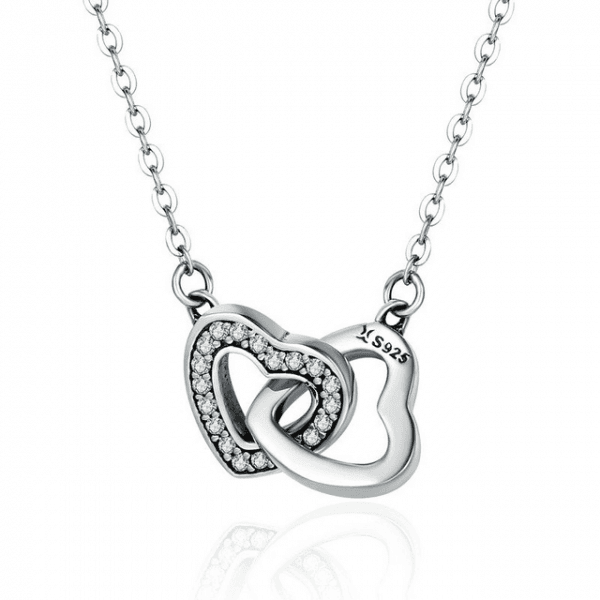
What matters most with CZ is the metal underneath. Our zirconia pieces are set in 925 sterling silver or gold-plated sterling silver, which won't wear through to a different metal and is comfortable for most sensitive skin. CZ set in plated base metal can tarnish quickly or turn skin green. More in the benefits of 925 sterling silver and crystal vs sterling silver hoops. Shipping is free on orders from €30.
When is a real diamond worth it?
Choose a diamond when the piece is meant to last:
- An engagement ring or wedding band, worn every day for life. See how to choose an engagement ring.
- A milestone gift: an anniversary, a big birthday, a graduation, the birth of a child.
- An heirloom you'd like to pass down.
- Everyday studs or a solitaire pendant that you never want to take off.
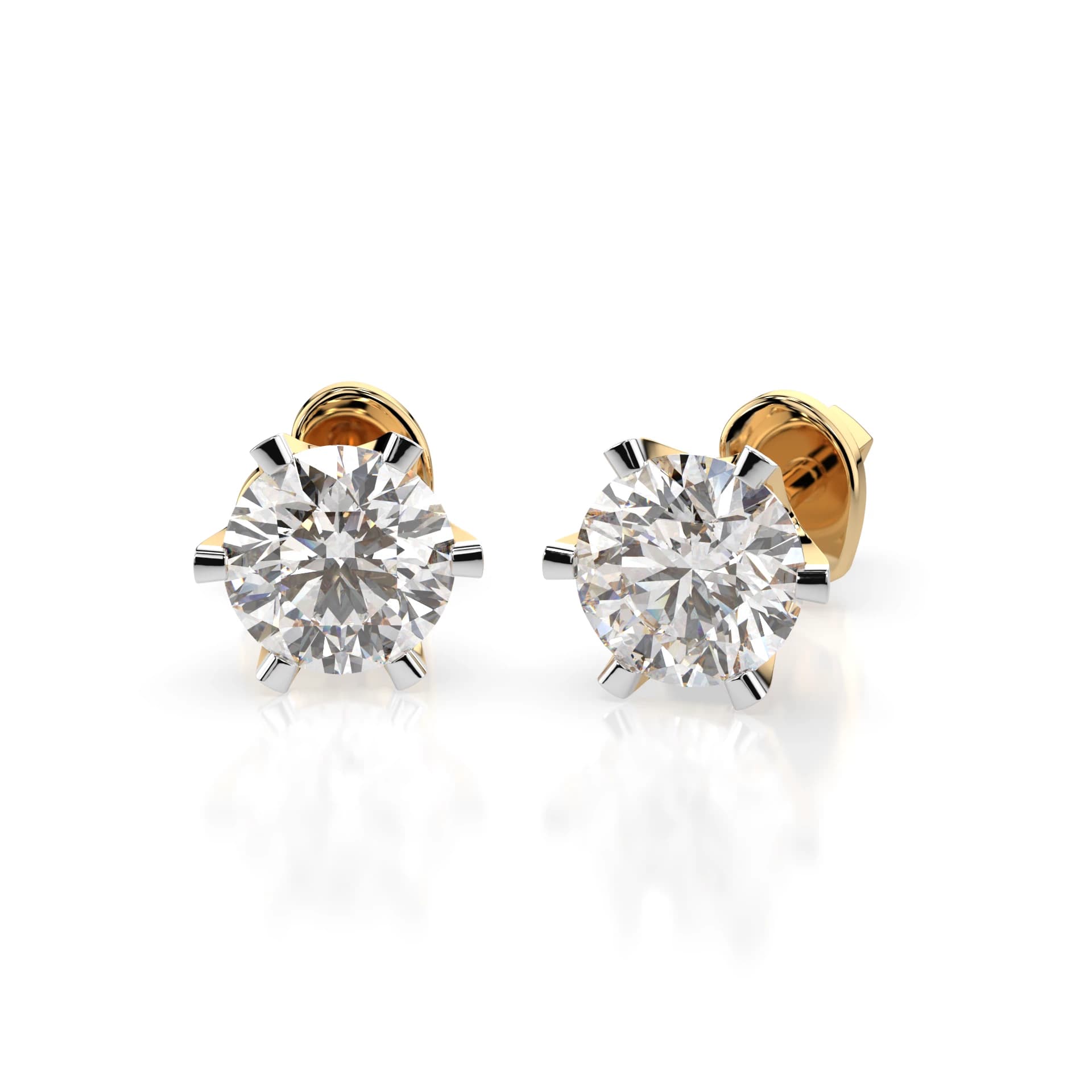
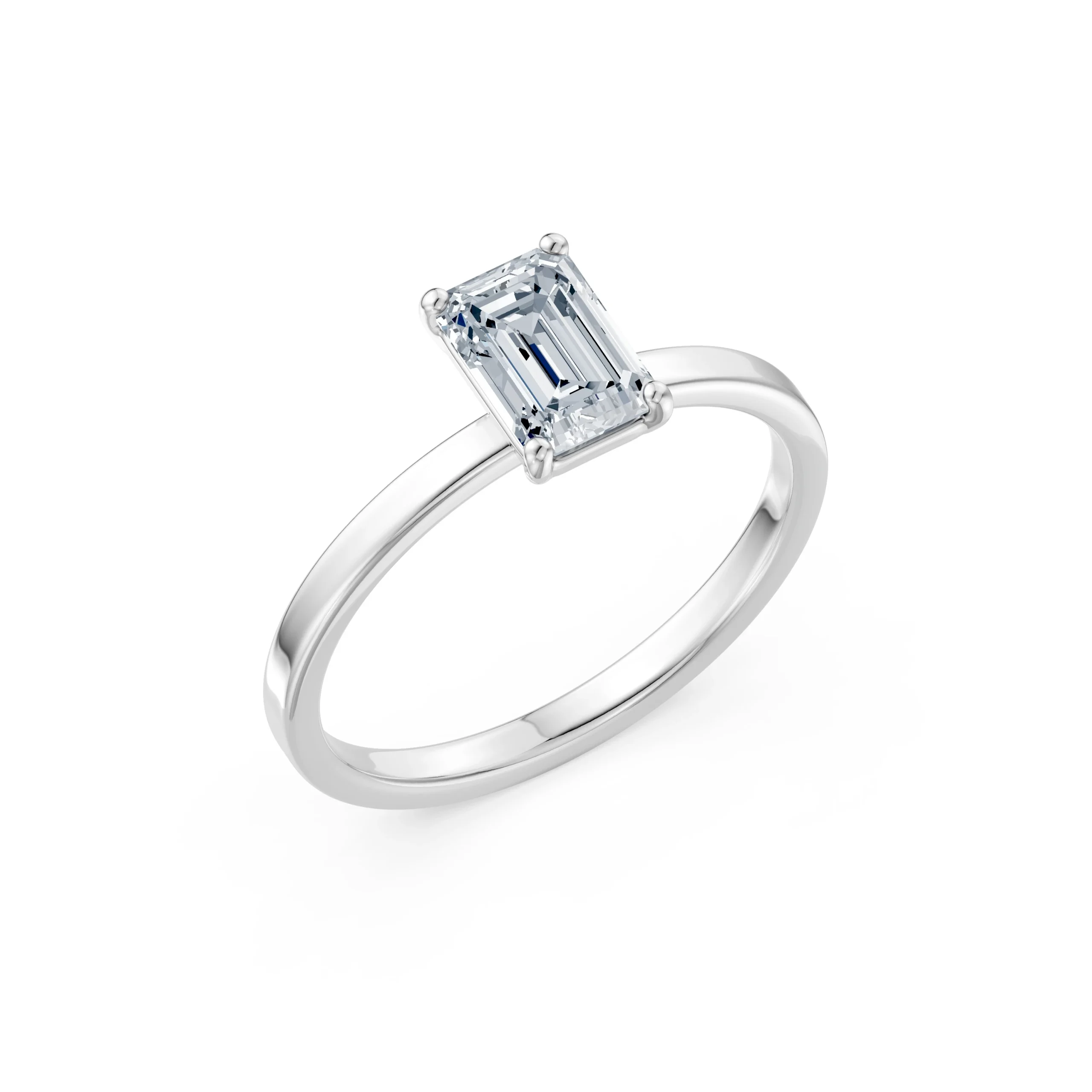
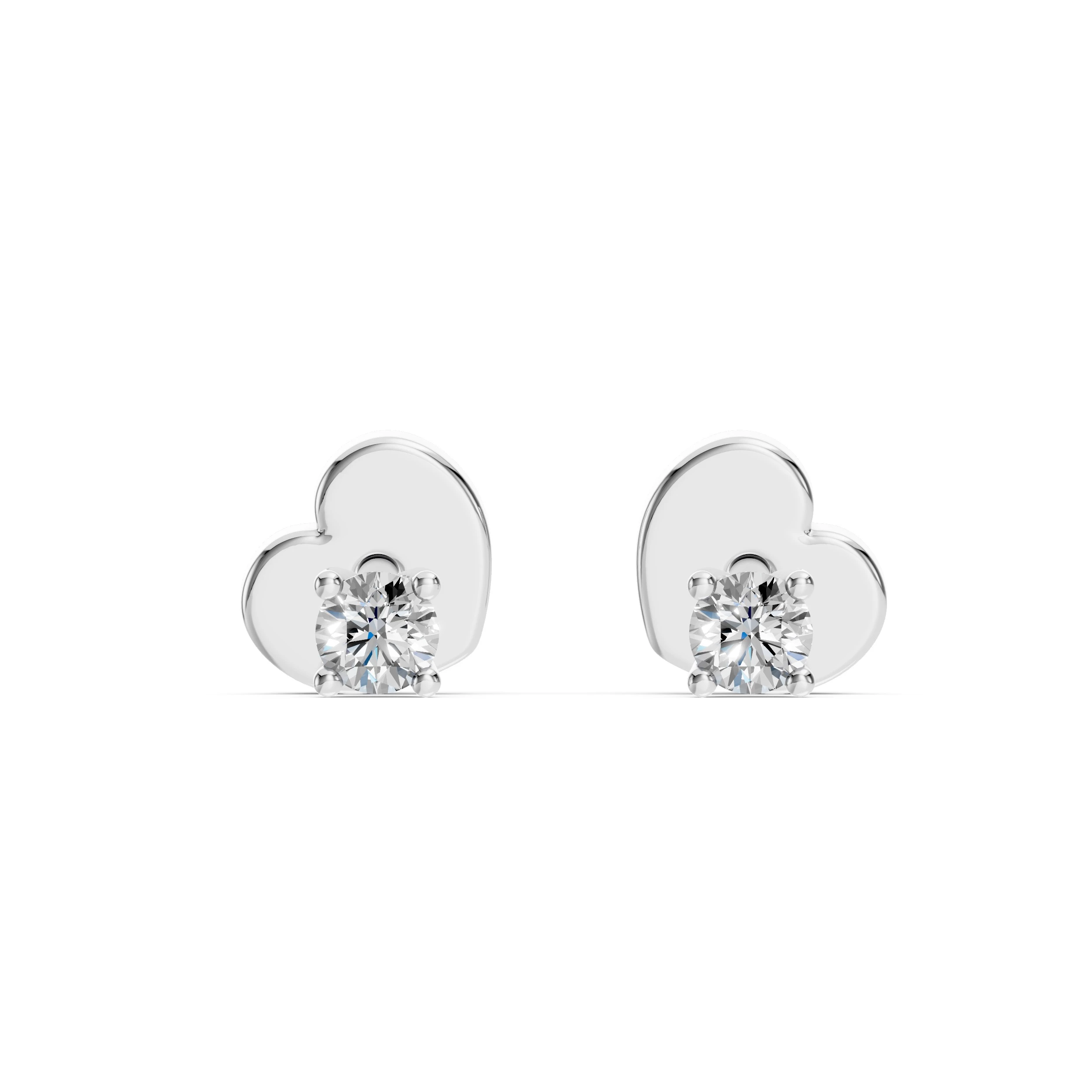
Real diamonds in solid gold cost less than many people expect. At Azure Chic, diamond stud earrings in 14k gold start at €540 with lab-grown diamonds, a floating diamond solitaire necklace at €720, and a diamond solitaire ring at €520. Our natural diamonds are G colour, VS2 clarity or better with a GIA report, and our lab-grown diamonds are D colour, VVS2 clarity with an IGI certificate where certified. Every piece comes in 9k, 14k or 18k white, yellow or rose gold, is dispatched in as little as 3 business days (most designs in 14k gold with a G/SI or lab-grown diamond; other options are made to order within 10 business days) with free insured shipping, and can be returned unworn within 30 days. Browse diamond earrings, necklaces or engagement rings.
Frequently asked questions
Is cubic zirconia a real diamond?
No. Cubic zirconia is a man-made crystal of zirconium dioxide that imitates a diamond. A diamond is pure carbon. Lab-grown diamonds, on the other hand, are real diamonds.
Does cubic zirconia look cheap?
Not when it is well cut and set in good metal. When new it sparkles beautifully, with more rainbow colour than a diamond. It can look cheap after years of daily wear, when scratches and dirt dull it, or when it is set in base metal that tarnishes.
Can cubic zirconia get wet?
Yes, water does not harm the stone itself. Soap, lotions and chlorine leave a film that dulls it, so take CZ off for swimming and cleaning, and rinse and dry it after wear. The metal it is set in matters more: sterling silver is fine with occasional water.
How long does cubic zirconia last?
The stone itself lasts for many years, but its surface slowly scratches and clouds with heavy daily wear, especially in rings. In earrings and necklaces CZ can look good for years with simple cleaning.
Will a jeweller know if it's cubic zirconia?
Yes. A jeweller can usually tell by eye and confirm it in seconds with a diamond tester. For valuable stones, a GIA or IGI grading report is the definitive proof.
Is moissanite better than cubic zirconia?
Moissanite is harder (about 9.25 on the Mohs scale against 8 to 8.5) and keeps its polish longer, so it lasts better in an everyday ring, but it costs more and shows even more rainbow fire. If you want a stone that looks exactly like a diamond, a lab-grown diamond is the closest choice.
What is cheaper than a diamond but still real?
A lab-grown diamond. It is a real diamond with the same hardness and sparkle as a natural one, and costs much less for the same size and grade. At Azure Chic, lab-grown diamond studs in 14k gold start at €540.
First published by the Azure Chic team in Limassol, Cyprus. Questions? Email sales@azurechic.com.